
Dolly Parton and the Courage to Become Yourself
Dolly Parton’s life reminds us to know ourselves, protect what we create, remain connected to our roots, and turn success into something useful for others.
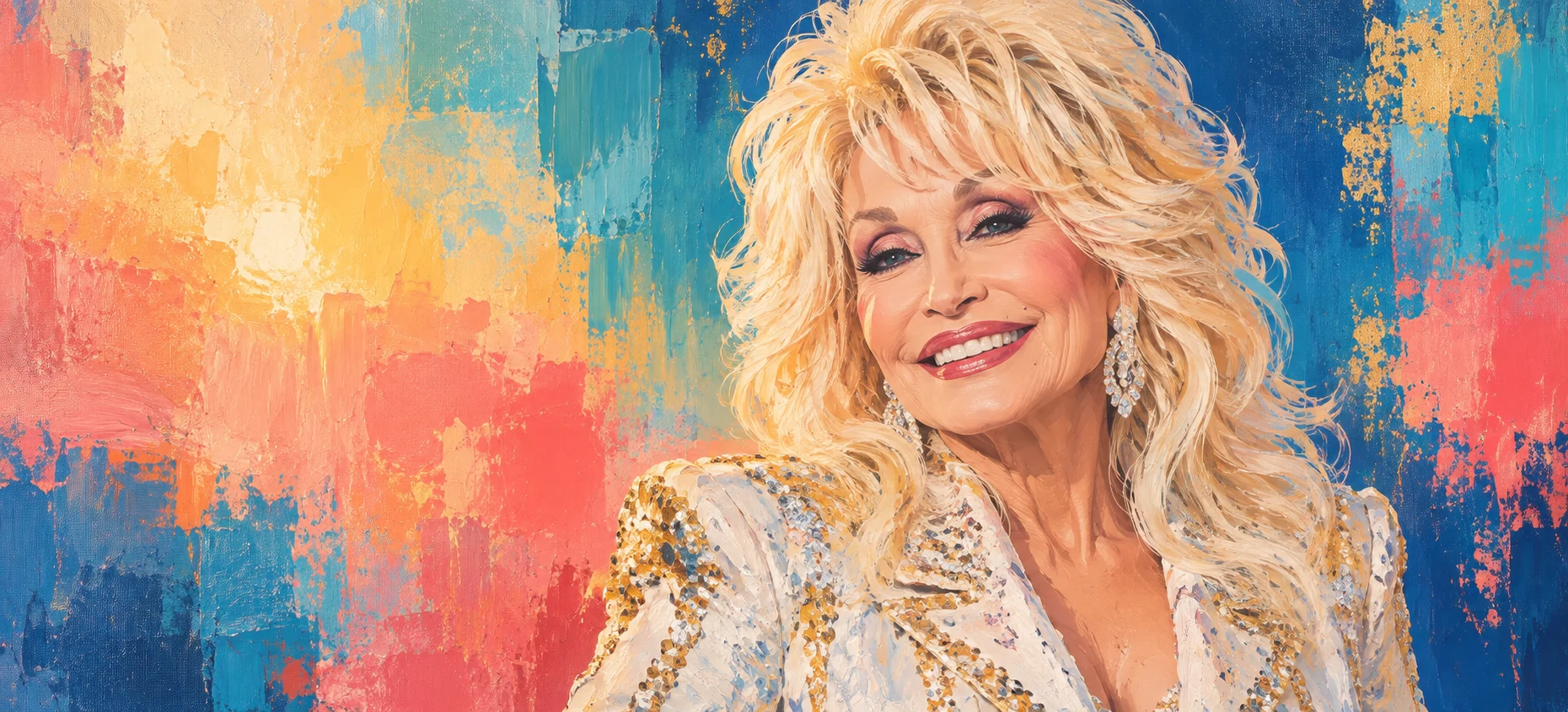
I was never a fan of Dolly Parton’s music. But I loved Dolly Parton.
I loved how she did business and how she turned her success toward charity—a combination I have rarely seen among musicians and celebrities. Most of all, I loved how completely she seemed to know who she was.
Dolly Parton died on August 25, 2026, at age 80, but the life she built remains instructive. Her influence reaches beyond her songs, rhinestones, and unmistakable voice. Across a seven-decade career, she was ambitious without appearing consumed by status, generous without making generosity a performance, and completely herself without demanding everyone’s approval.
I did not know her, of course. I loved the person she showed us: funny, generous, shrewd, and secure in herself. Her clothes, accent, business decisions, humor, and philanthropy all seemed to belong to the same person. Dolly’s life was extraordinary, but its most valuable lessons are surprisingly ordinary. They are about knowing who you are, protecting what matters, and contributing something meaningful to others.
Become Recognizable to Yourself
Dolly never waited for other people to tell her who she should be.
Her appearance was deliberately theatrical, but it did not feel like a disguise. The towering blonde hair, rhinestones, humor, and warmth were parts of an identity she chose and inhabited without apology. She could joke about herself without surrendering the right to define herself.
I have spent years asking a question that eventually became the name of my consulting work: Who defines you? Dolly seemed to know her answer. The public could admire her, misunderstand her, or laugh with her, but they did not get to decide who she was.
Fulfillment begins when we stop asking, “What will make me look successful?” and start asking, “What kind of life honestly feels like mine?” It may mean choosing work that suits your temperament, protecting your quiet mornings, or refusing goals you never truly wanted.
The point is not to manufacture a persona as memorable as Dolly’s. It is to become recognizable to yourself. I explored the same struggle in What Oliver Tree’s Life Teaches Us About Not Waiting to Become Ourselves, but Dolly’s example adds something important: self-knowledge can be playful. Authenticity does not have to look plain or solemn.
Let Your Past Become Material
Dolly grew up in poverty in rural Tennessee. She never hid that history, but she also never allowed it to determine the limits of her future.
She transformed memories of hardship, family, faith, love, and Appalachian life into stories and songs. The place she came from remained part of her voice, her work, and the way she understood other people.
She did not need to reject her origins in order to grow beyond them. Her past became creative material rather than a permanent sentence.
We cannot change where we began, what happened to us, or what opportunities we were denied. But we can decide what role those experiences will play in the rest of our lives. A difficult beginning can deepen our compassion for others.
A fulfilling life does not require pretending the past was better than it was. It requires learning how to carry it without allowing it to control every step forward. Growth should expand us without making us strangers to ourselves.
Protect What You Create
Behind Dolly’s warmth and humor was someone who understood the value of ownership.
The clearest example came when Elvis Presley wanted to record “I Will Always Love You.” His manager required Dolly to surrender half of the publishing rights. She refused, even though an Elvis recording could have given her enormous exposure. The decision protected a song that later became a worldwide hit for Whitney Houston. As the Library of Congress explains, Dolly remained the copyright owner of the lyrics and composition.
Having spent much of my life building businesses, I understand how difficult it can be to reject a prestigious opportunity. Exposure is seductive, especially when it arrives wearing a famous name. What I admired about Dolly was her willingness to value ownership over validation.
That was not stubbornness for its own sake. It was recognition. She knew the song’s value and understood that immediate attention was not worth giving away something important.
Everyone needs something that belongs to them: ideas, time, creative practice, livelihood, home life, or convictions. Otherwise, life can become a collection of obligations built around other people’s priorities.
Protecting what you create does not mean becoming possessive or inflexible. It means refusing to treat your time, talent, and attention as though they are unlimited. I came to a similar realization about keeping part of life for myself in I Stopped Sharing My Life and Started Living It.
Turn Success Outward
Dolly did not stop at protecting what she created. She also used what she built to help other people.
Her clearest expression of purpose may be Dolly Parton’s Imagination Library, which continues to put books into the hands of children. The program connects her history, love of reading, family values, and financial success to a practical human need.
It is not generosity in the abstract. It is a specific contribution grounded in what mattered to her.
Purpose does not have to be grand or global. It begins where our abilities meet a genuine need: sharing food, teaching, writing, or checking on a neighbor.
We do not need Dolly’s resources to live generously. We only need to ask, “What do I have that could make someone else’s life a little better?” Purpose often begins with a smaller question.
Make Room for Humor and Play
Dolly understood that depth does not require constant seriousness.
Her humor, glamorous costumes, and playful self-awareness coexisted with discipline and compassion. She could be serious about her work without treating herself as sacred. Her example reminds us that a meaningful life can also be colorful, funny, and occasionally ridiculous.
This matters because personal growth can become another exhausting obligation, with every hour optimized and every interest monetized.
But fulfillment is not a performance review.
A good life includes laughter that accomplishes nothing, hobbies that never become businesses, clothes we wear simply because we enjoy them, and moments that will never appear on a résumé.
Joy is not a distraction from a meaningful life. It is part of one. Dolly’s joy mattered because it did not feel separate from her ambition or generosity. It helped make her public life feel so distinctly hers.
Decide What Enough Means
Dolly achieved wealth, recognition, and cultural influence, but those accomplishments alone do not explain why people continue to admire her.
Plenty of famous people are successful without seeming fulfilled. Dolly’s deeper achievement was building a version of success connected to her identity, values, creativity, and desire to contribute. Her outer life seemed to express what mattered to her.
That is a stronger definition of success than visibility or wealth alone.
Money can provide freedom, and achievement can be satisfying. Neither can determine whether the life we are building is worth inhabiting.
There is also one part of Dolly’s example we should be careful not to imitate blindly: her extraordinary productivity. Most people cannot—and should not—attempt to match her output. Fulfillment is not measured by how many songs, businesses, projects, or charitable programs we create.
The lesson is not to do as much as Dolly did. The lesson is to make what we do more closely express who we are.
My own version of enough is not a larger company or a busier calendar. It is a few hours of meaningful work, time outside, the freedom to exercise when I want, creative projects, and meals at home with my wife. Dolly’s life looked nothing like mine, but she strengthened my belief that success should reflect the person living it.
A smaller life is not necessarily a lesser life. As I argued in Stop Optimizing Your Life and Start Living It, life should not become an endless project of improving our performance.
Becoming More Fully Yourself
The most meaningful lesson from Dolly Parton’s life is not that we should become more like Dolly.
It is that we should become more completely ourselves.
We can honor where we came from without remaining trapped there. We can pursue ambition without sacrificing kindness. We can protect our work while sharing our gifts. We can be serious about our values without becoming serious about every moment.
Fulfillment comes from creating a life that feels recognizably our own—and then using some part of that life to leave other people a little better than we found them.
That may be why so many people continue to love Dolly Parton, even when they don’t love country music. Her life represents the freedom of knowing who you are, the courage to remain that person, and the generosity to turn success into something larger than yourself.
Keep reading
Related pieces
I Started a Book Club. Kinda.
I started a local book club in my area by passing books to a friend and letting useful ideas travel from one reader to the next.
Read essayI Stopped Sharing My Life and Started Living It
After a grand mal seizure forced me offline, journaling gave me a private way to document my life—and helped me live with more attention, balance,…
Read essay
Why I Made Unplug
Why Christopher Sherrod created Unplug after becoming highly sensitive to electronics following a major seizure, and what he learned by eliminating…
Read news